

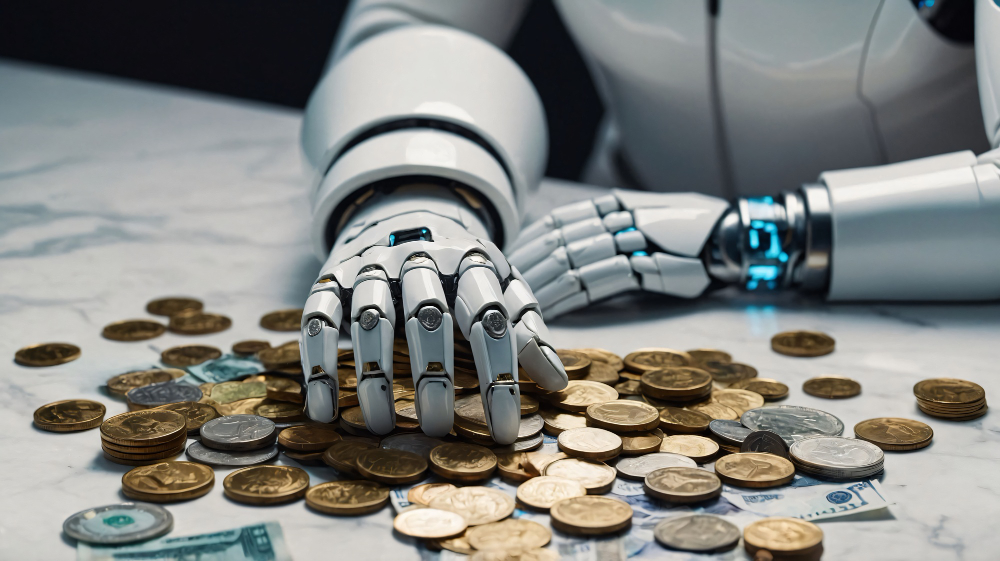
How Artificial Intelligence Is Revolutionizing the World Economy
Artificial Intelligence (AI) is no longer a futuristic concept — it’s a driving force behind global economic transformation. From manufacturing and finance to healthcare and retail, AI is reshaping how industries operate, increasing productivity, and creating new economic opportunities. Let’s explore how AI is revolutionizing the world economy in 2025 and beyond.
1. Boosting Productivity and Efficiency
AI automates repetitive tasks, optimizes workflows, and minimizes human error.
This leads to higher productivity across industries such as manufacturing, logistics, and IT.
Examples:
- Automated supply chain management systems
- Predictive maintenance in factories
- AI-powered data analysis for faster decision-making
💡 Impact: Businesses can produce more with fewer resources, improving profits and global competitiveness.
2. Creating New Job Opportunities and Industries
While AI automates some jobs, it also creates new roles in AI engineering, data science, and automation management.
Emerging Fields:
- AI ethics and governance
- Machine learning operations (MLOps)
- Robotics and AI-driven design
🌍 Result: The global job market is evolving, focusing on innovation, creativity, and digital skills rather than manual tasks.
3. Driving Innovation in Business Models
AI is inspiring new ways of doing business by enabling personalization, data-driven insights, and automation.
Examples:
- E-commerce sites using AI to recommend products
- Financial institutions using AI for fraud detection
- Healthcare using predictive AI for early disease diagnosis
💼 Impact: Companies can make smarter, faster, and more profitable decisions.
4. Enhancing Global Trade and Market Predictions
AI’s ability to process massive amounts of data helps predict economic trends and global market movements.
Benefits:
- Real-time insights into trade patterns
- Forecasting commodity prices and stock performance
- AI-based financial modeling and investment planning
📊 Impact: Governments and investors can make informed economic decisions, reducing risk and volatility.
5. Transforming Healthcare and Biotechnology
AI’s integration into healthcare has revolutionized diagnosis, treatment, and drug development.
Applications:
- AI-driven diagnostics and medical imaging
- Predictive analytics for disease prevention
- Faster drug discovery using AI simulations
💡 Economic Value: AI healthcare technologies are expected to save billions annually by improving efficiency and outcomes.
6. Advancing Smart Manufacturing (Industry 4.0)
AI-driven automation, robotics, and the Internet of Things (IoT) are transforming manufacturing industries worldwide.
Examples:
- Smart factories using predictive maintenance
- Robots working alongside humans
- Real-time inventory management systems
🏭 Outcome: Reduced costs, fewer errors, and increased production speed.
7. AI in Finance and Banking
AI enhances fraud detection, customer service, and financial analysis.
Examples:
- AI chatbots offering 24/7 banking assistance
- Algorithmic trading for real-time investment optimization
- Risk assessment tools improving loan approvals
💰 Result: Increased trust, accuracy, and financial stability across the global economy.
8. Promoting Sustainability and Green Growth
AI supports global sustainability efforts by optimizing energy use and reducing waste.
Examples:
- AI-powered smart grids managing renewable energy
- Predictive climate models for policy planning
- Sustainable agriculture through precision farming
🌱 Impact: A cleaner, greener, and more efficient global economy.
9. Enhancing Education and Workforce Training
AI is personalizing learning experiences and preparing workers for the digital future.
Applications:
- Virtual tutors and adaptive learning systems
- Skills-based training for future AI-related jobs
- Language and communication learning through AI
🎓 Outcome: A more skilled and adaptable global workforce.
10. Changing Global Power Dynamics
Nations investing heavily in AI are gaining economic and technological dominance.
Examples:
- The U.S., China, and Europe leading in AI research and innovation
- Developing countries adopting AI to improve agriculture and infrastructure
🌍 Impact: The world economy is becoming more interconnected yet competitive — with AI as the defining factor of growth.
Conclusion
Artificial Intelligence is transforming the global economy by driving innovation, improving efficiency, and reshaping industries. While challenges like job displacement and ethical concerns exist, the benefits of AI — from sustainability to productivity — far outweigh the risks.
The nations and businesses that embrace AI responsibly will lead the next wave of economic growth and prosperity.